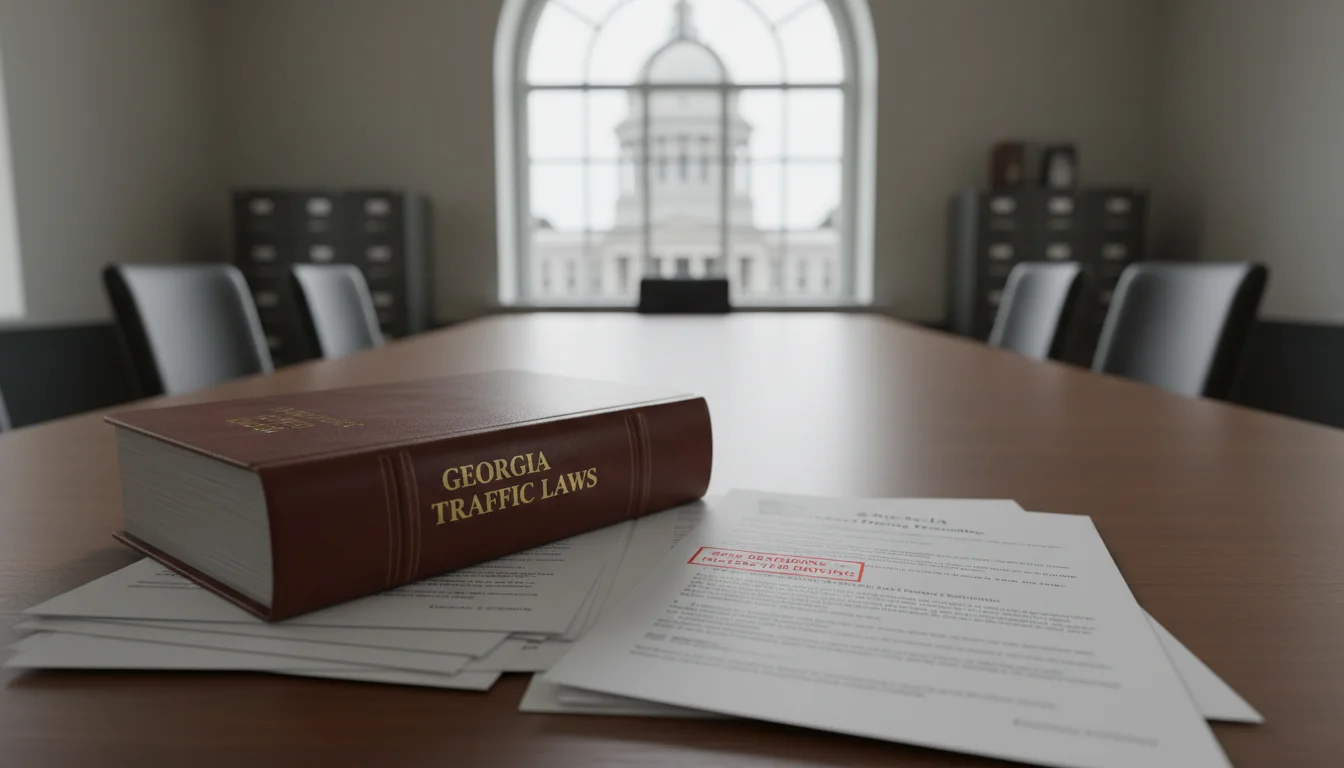
As of January 1, 2026, Georgia’s “Hands-Free” law, O.C.G.A. Section 40-6-241.2, has new teeth. For anyone hit by a distracted driver on a busy road like Valdosta Airport Rd, this is a big deal. The revised statute brings tougher penalties and, more importantly, it clarifies how evidence of phone use can be used in court, which completely changes how we approach claims for compensation.
Key Takeaways
- With the amended O.C.G.A. Section 40-6-241.2 (effective Jan 1, 2026), higher fines and license points for hands-free tickets make it easier to prove negligence in a civil suit.
- New rules under O.C.G.A. Section 24-14-1 mean specific phone usage data can now be admitted as evidence in civil court, as long as the right procedures are followed.
- If you’re in an accident anywhere in Georgia, including Valdosta Airport Rd, call the police immediately to get any potential hands-free violations on the official record.
- It’s important to know the difference between who’s primarily liable (the driver) and who’s secondarily liable (like a trucking company) in these cases.
- Getting a lawyer involved early is the only way to correctly handle the new evidence rules and get the best possible outcome from a settlement or trial.
Stricter Hands-Free Law: O.C.G.A. Section 40-6-241.2 Amendments
The Georgia General Assembly got serious about distracted driving, amending O.C.G.A. Section 40-6-241.2 effective at the start of 2026. This goes far beyond higher fines. It directly affects civil liability. What used to be a simple traffic ticket for a hands-free violation now has much bigger consequences for at-fault drivers and creates real use for victims.
The new statute’s penalties are significant. A first offense in 24 months costs you $150 and 3 license points. It jumps to $250 and 4 points for a second offense, and $350 and 5 points for a third. This gives prosecutors more incentive to pursue these charges, and from my perspective as a plaintiff’s attorney, it gives us a much clearer path to proving negligence per se in a personal injury claim.
Maybe the biggest change is how distracted driving is now an explicit aggravating factor for other tickets. If someone causes a wreck on Valdosta Airport Rd because they were on their phone, any other citation they get, like for reckless driving, gets much more serious. This legislative shift to punish distracted driving gives victims a powerful tool. It’s now much easier to prove the direct link between the illegal phone use and the crash, thanks to the new evidence rules.
New Evidentiary Standards for Electronic Device Usage: O.C.G.A. Section 24-14-1
The amendments to O.C.G.A. Section 24-14-1, which controls how electronic data is used in civil court, are a massive change for victims. Before 2026, getting a driver’s cell phone records was a nightmare of discovery motions and legal fights. The new law simplifies the whole thing, giving plaintiffs a much better shot at showing clear proof of a driver’s distraction.
The law now lets us introduce data from the at-fault driver’s phone, including call logs, text message timestamps, and even records of app usage, under specific circumstances. It doesn’t grant free-for-all access to their personal life. Strong privacy protections are still in place. But a judge can now order them to produce this data if we make a good case for its relevance, using things like witness testimony, an accident reconstruction report, or dashcam video.
This change has a huge impact on claims from wrecks on Valdosta Airport Rd. Take a common scenario: a witness sees the other driver looking down at their phone right before they cause a crash. Now, using O.C.G.A. Section 24-14-1, I can go to a judge and get an order for the cell records that could prove they were texting at that exact moment. That kind of direct evidence puts the defendant on their back foot and forces them to explain what they were doing.
Just holding the phone isn’t sufficient. The data has to show the driver was actually *using* it. But the message from the legislature is obvious: they want distracted drivers held accountable. I’ve been in countless negotiations where this kind of evidence makes all the difference. Insurance companies love to argue there’s no “definitive proof,” but when you show them the phone records, that argument disappears fast.
Who is Affected by These Changes?
These new laws affect everybody on Georgia roads, whether you’re just commuting on Valdosta Airport Rd or driving a big rig down I-75. The main groups are:
- Drivers: Every driver in Georgia has to follow these stricter hands-free rules or face bigger penalties. Keep your eyes on the road.
- Victims of Distracted Driving: If you’re hit by a distracted driver, you now have stronger legal tools. Getting access to their phone data can make your path to getting compensated much more direct.
- Insurance Companies: It’s now harder for insurers to deny a claim when there’s clear evidence of distracted driving. The new evidence rules take away the gray areas they used to use, which should lead to faster, fairer settlements.
- Commercial Carriers: Trucking companies and other businesses with drivers on the road face way more liability. They’re held to a higher standard, so a distracted driving crash involving one of their trucks on a route like Valdosta Airport Rd can be a massive corporate problem. Federal FMCSA rules already exist, and Georgia’s law just adds another layer of protection for victims.
The effective date is January 1, 2026. Any accident from that day on is subject to these new rules. The law isn’t retroactive. It marks a clear dividing line for how distracted driving cases will be handled in Georgia’s courts from now on.
Concrete Steps for Accident Victims on Valdosta Airport Rd
If you’re in a wreck on Valdosta Airport Rd or anywhere else in Georgia and think the other driver was distracted, you have to take specific steps right away. These initial actions are absolutely essential for building a strong claim under the new laws.
At the Scene of the Accident: Document Everything
- Call 911 Immediately: Insist on a police response from the Valdosta Police Department or Lowndes County Sheriff’s Office. You absolutely must have an official police report. An officer’s notes about a potential hands-free violation are priceless.
- Watch the Other Driver: Did you see them with a phone? Were they looking down? Did they seem confused after the crash? Make a mental note and tell the officer exactly what you saw.
- Get Witness Info: If anyone else saw it happen, get their name and phone number. A third-party witness who saw the other driver on their phone is a huge asset.
- Take Pictures and Video: Use your phone and document everything. Get shots of the vehicle damage, the road, traffic signs, everything. If you can do it safely, try to get a picture of the other car’s interior, especially if you can see a phone lying around.
After Leaving the Scene: Protect Your Rights
- Get Medical Care: Go get checked out, even if you feel okay. Injuries like whiplash or concussions can show up later. Your health comes first, and the medical records are the backbone of your injury claim. Valdosta has good facilities like South Georgia Medical Center. Use them.
- Don’t Talk to Their Insurance: The other driver’s insurance company isn’t your friend. Their only job is to pay you as little as possible. Anything you say can and will be twisted. Refer all calls to your lawyer.
- Preserve Your Own Phone Data: If you used your phone to call 911 or take pictures, don’t delete anything. You need to maintain the integrity of your own records.
- Call a Lawyer. Fast.: The sooner you get an experienced Georgia personal injury lawyer on your side, the better. Getting electronic data under the new O.C.G.A. Section 24-14-1 is a complex legal process. An attorney can immediately file the right motions to preserve the other driver’s cell phone records before the carrier deletes them or the driver tries to wipe them. We know the procedures for courts like the Lowndes County Superior Court and how to make these new laws work for you.
| Factor | Pre-2026 Law | Post-2026 Law |
|---|---|---|
| Effective Date | Prior to Jan 1, 2026 | Jan 1, 2026 |
| Negligence Argument | Often a simple traffic ticket | Strengthened, clearer path to proving negligence |
| Electronic Device Data Admissibility | Often an uphill battle | Easier, allows specific usage data |
| First Offense Fine (24-month) | Not specified | $150 |
| First Offense Points (24-month) | Not specified | 3 points |
| Impact on Civil Liability | Less direct impact | Directly impacts civil liability |
Understanding Negligence and Liability in Distracted Driving Cases
In Georgia, winning a personal injury claim means proving the other person was negligent. These new Hands-Free law amendments give us a much stronger way to do that. It boils down to four things: duty, breach, causation, and damages.
- Duty: Every driver has a duty to drive safely and follow the law. Simple enough.
- Breach: A distracted driver breaks that duty the second they violate O.C.G.A. Section 40-6-241.2 by holding their phone. Thanks to a legal concept called negligence per se, breaking a safety law like this one is considered an automatic breach of duty. This gives us a massive legal advantage.
- Causation: We have to prove their distracted driving is what actually caused the wreck and your injuries. This is where the new O.C.G.A. Section 24-14-1 is a big deal. If phone records show texting at the moment of impact, it draws a direct line from their action to the crash.
- Damages: This is everything you lost because of the wreck: your medical bills, lost paychecks, pain and suffering, and other costs.
The driver isn’t always the only one on the hook. If the distracted driver was in a company truck, the employer can also be held responsible through a principle called respondeat superior. Basically, the boss is liable for what their employee does on the job. This is a big factor on a commercial route like Valdosta Airport Rd which is always busy with traffic from Valdosta Regional Airport and local business parks. Cases against commercial carriers are more complicated, but they often lead to larger recoveries because the insurance policies are much bigger.
Proving all these pieces, especially tricky things like causation and the full extent of damages, demands more than just reading the statute. It requires someone who knows Georgia law inside and out and knows how to use it in a courtroom and during negotiations with insurance adjusters.
Why You Need to Act Fast and Get a Lawyer
The clock starts ticking the second a crash happens. With these new distracted driving laws, that’s truer than ever. The electronic data that can win or lose a case is incredibly fragile. Cell phone companies don’t keep detailed logs forever. If we don’t take legal action fast, that proof can be gone for good. A court order to preserve and produce those records has to be filed right away.
Getting a lawyer involved early also means a proper investigation can begin immediately. We need to interview witnesses before their memories fade. We need to get the police reports and look for any available traffic camera footage. Sometimes we need to bring in accident reconstruction experts. If you wait weeks or months, a lot of that evidence gets harder to find or disappears completely. The insurance companies know this, which is why they’ll either try to stall or offer you a quick, lowball settlement before you can figure out what your case is really worth.
A lawyer also takes over all the calls with insurance adjusters, protecting you from saying something accidentally that could hurt the claim. They’ll handle the negotiations, using the power of this new legal framework to demand fair payment for medical bills, lost income, and pain and suffering. Trying to handle this alone is a huge mistake. The legal system, and especially these new evidence rules, is complicated and requires specific expertise to get right.
The changes to O.C.G.A. Sections 40-6-241.2 and 24-14-1 give victims of distracted drivers real power to get justice. But these tools don’t work unless they’re used correctly and, most importantly, quickly. Knowing what’s changed and acting fast are the best ways to protect yourself after being hit by someone who wasn’t paying attention.
Georgia’s updated distracted driving laws give victims a much better chance at getting fair compensation. If a distracted driver on Valdosta Airport Rd or anywhere else in Georgia has hurt you or a family member, get legal help right away. Acting fast can have a major effect on your case’s outcome. These new laws are especially relevant if you’re in a Valdosta DoorDash crash, and they also make it much easier to prove distraction in UberEats Valdosta I-75 claims.
Key changes to O.C.G.A. Section 40-6-241.2 (Hands-Free Law)
Effective January 1, 2026, O.C.G.A. Section 40-6-241.2, Georgia’s Hands-Free law, now imposes higher fines of $150, $250, and $350 for first, second, and third or subsequent offenses within a 24-month period, respectively, along with increased points on a driver’s license. It also makes hands-free violations an aggravating factor in other traffic offenses.
How the new O.C.G.A. Section 24-14-1 helps victims
The revised O.C.G.A. Section 24-14-1, also effective January 1, 2026, simplifies the process for admitting electronic device usage data (like call logs, text message timestamps, and app usage) as evidence in civil cases. This makes it easier to prove a driver was distracted and in violation of the Hands-Free law at the time of an accident, strengthening the victim’s negligence claim.
What electronic data is now admissible evidence?
Under the new O.C.G.A. Section 24-14-1, relevant data from a driver’s electronic communication device, such as specific call times, text message timestamps, and records of active application use, can be admitted. This requires demonstrating the device was with the driver and the data is pertinent to proving a hands-free violation or other negligent conduct.
First steps after a suspected distracted driving accident
Immediately call 911 to ensure a police report is filed, gather witness contact information, and take extensive photographs and videos of the scene. After leaving the scene, seek medical attention promptly and consult with an attorney to discuss preserving and obtaining important electronic device data.
Employer liability for distracted commercial drivers
Yes, if a commercial driver causes an accident while distracted and violating the Hands-Free law, their employer can often be held liable under the legal principle of respondeat superior, meaning the employer is responsible for the actions of their employees while on duty. This can apply to accidents involving commercial vehicles on routes like Valdosta Airport Rd.



