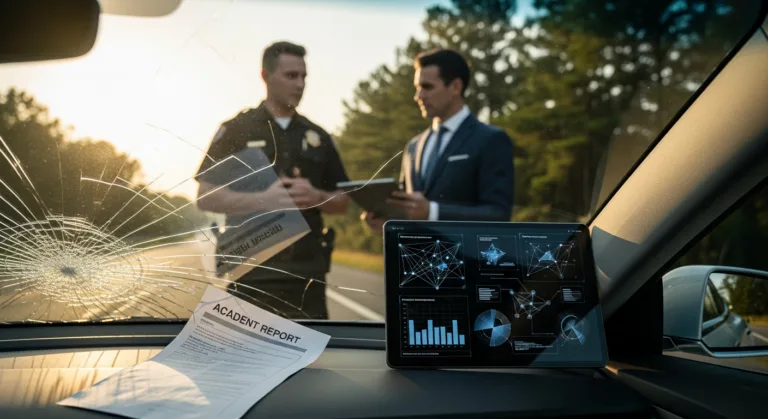
Introduction: Telematics, Car Accident Claims, and Liability in Alpharetta
Telematics is rapidly changing how car accident claims are handled, particularly concerning liability. In Alpharetta, GA, and beyond, the use of accident data collected by these devices is becoming increasingly prevalent in legal proceedings. These technologies record everything from speed and braking to location and impact force. With insurers and legal teams increasingly relying on this data, how will it impact your claim if you’re involved in an accident?
Understanding Telematics and Accident Data
Telematics systems utilize GPS, sensors, and mobile networks to gather and transmit real-time data about a vehicle’s operation. These systems are becoming increasingly common in personal vehicles, commercial fleets, and even ride-sharing services. The data collected includes a wide range of information, such as:
- Speed: Precise speed at any given moment.
- Acceleration and Braking: Measurements of how quickly a vehicle accelerates or decelerates.
- Location: GPS data pinpointing the vehicle’s location at all times.
- G-force: Measurement of the force experienced during sudden stops or impacts.
- Driving Habits: Monitoring of behaviors like hard braking, rapid acceleration, and sharp turns.
- Impact Data: Information recorded during a collision, including the severity and direction of impact.
This wealth of information is incredibly valuable when investigating car accident claims. It offers an objective, verifiable record of events leading up to, during, and after an accident, supplementing or even replacing traditional methods like eyewitness testimony and police reports. For example, if two drivers disagree about who ran a red light, telematics data from either vehicle could provide definitive proof.
How Telematics Impacts Liability in Car Accident Claims
The primary way telematics impacts liability is by providing concrete evidence to support or refute claims of negligence. Here’s how:
- Establishing Fault: Data such as speed and braking patterns can clearly show if a driver was speeding, following too closely, or driving aggressively. This information can directly establish fault in an accident.
- Challenging Eyewitness Testimony: Telematics data is objective and less susceptible to bias or inaccurate recollections than eyewitness accounts. If a witness claims a driver was speeding, but the data shows they were within the speed limit, the telematics data will likely be given more weight.
- Reconstructing Accidents: Experts can use telematics data to reconstruct the events leading up to an accident, providing a clear visual representation of what happened. This can be particularly useful in complex cases with multiple vehicles or unclear circumstances.
- Identifying Contributing Factors: Besides driver behavior, telematics can also reveal mechanical issues or environmental factors that contributed to the accident. For example, data might show a sudden drop in tire pressure or indicate that the driver swerved to avoid an obstacle in the road.
In Alpharetta, GA, and across the country, courts are increasingly accepting telematics data as evidence in car accident claims. However, it’s important to understand the legal requirements for admissibility. The data must be authenticated, meaning it must be proven that the data is genuine and has not been tampered with. This often requires expert testimony from telematics specialists.
Navigating the Legal Landscape in Alpharetta, GA
When dealing with car accident claims involving telematics in Alpharetta, GA, several legal considerations come into play. Firstly, Georgia’s rules of evidence govern the admissibility of telematics data. These rules require that the data be relevant, authenticated, and not unfairly prejudicial. If the opposing party can demonstrate that the data is unreliable or that its probative value is outweighed by the risk of confusing the jury, the court may exclude it.
Secondly, privacy laws may restrict access to telematics data. Generally, drivers must consent to the collection and use of their data. However, there are exceptions, such as when a court orders the release of the data or when the data is anonymized. It’s crucial to understand your rights and obligations regarding telematics data, both as a driver and as a claimant.
Thirdly, insurance companies are increasingly using telematics to assess risk and determine premiums. Many insurers offer discounts to drivers who agree to have their driving habits monitored. However, this data can also be used to deny claims or increase premiums if a driver is found to be engaging in risky behavior. It’s essential to carefully review your insurance policy and understand how telematics data may affect your coverage.
Challenges and Limitations of Using Telematics Data
While telematics offers significant advantages in car accident claims, it’s important to acknowledge its limitations. The accuracy and reliability of the data depend on the quality of the telematics system and the proper installation and maintenance of the device. Malfunctions, software glitches, or even poor GPS signal can lead to inaccurate or incomplete data. Geotab, for instance, is a prominent telematics provider, but even their systems are not immune to occasional errors.
Furthermore, interpreting telematics data requires expertise. It’s not always straightforward to determine the cause of an accident based solely on the data. Factors such as road conditions, weather, and the actions of other drivers must also be considered. Expert testimony is often necessary to explain the data and its implications to a judge or jury.
Another challenge is ensuring the privacy and security of telematics data. The data is highly sensitive and could be vulnerable to hacking or unauthorized access. It’s crucial to take steps to protect your data and ensure that it is used only for legitimate purposes. This includes using strong passwords, keeping your telematics system updated with the latest security patches, and being aware of the privacy policies of your telematics provider.
Finally, it’s important to remember that telematics data is just one piece of the puzzle. It should be considered in conjunction with other evidence, such as police reports, witness statements, and physical evidence from the accident scene. Relying solely on telematics data can lead to an incomplete or inaccurate understanding of the accident.
Protecting Your Rights in a Telematics-Involved Accident
If you’re involved in a car accident in Alpharetta, GA, where telematics data is a factor, here are some steps you can take to protect your rights:
- Consult with an Attorney: An experienced car accident attorney can advise you on your legal rights and options. They can help you understand the implications of telematics data in your case and develop a strategy for protecting your interests.
- Preserve the Evidence: If your vehicle is equipped with a telematics system, take steps to preserve the data. This may involve contacting your telematics provider and requesting a copy of the data. Do this as soon as possible, as data can be overwritten or deleted.
- Understand Your Insurance Policy: Review your insurance policy to understand how telematics data may affect your coverage. Be aware of any provisions that allow your insurer to access and use your data.
- Be Cautious About Sharing Data: You are not obligated to share your telematics data with the other party or their insurance company without a court order. Consult with your attorney before releasing any data.
- Challenge Inaccurate Data: If you believe that the telematics data is inaccurate or unreliable, challenge it. Your attorney can help you gather evidence to support your challenge and present it to the court.
Remember, the rise of telematics is changing the landscape of car accident claims. Being informed and proactive is the best way to protect your rights and ensure a fair outcome.
Can insurance companies force me to install a telematics device?
No, insurance companies cannot force you to install a telematics device. However, they may offer discounts or incentives for doing so. Participation is typically voluntary.
What if my telematics data contradicts my version of events?
If your telematics data contradicts your version of events, it’s crucial to consult with an attorney. There may be explanations for the discrepancy, such as a malfunction of the telematics system or external factors not captured by the data. Your attorney can help you investigate the issue and present your case effectively.
How long is telematics data stored?
The length of time telematics data is stored varies depending on the provider and the terms of service. Some providers may store data for a few months, while others may store it for several years. It’s important to check the privacy policy of your telematics provider to understand their data retention practices.
Can I access the telematics data from the other driver’s vehicle?
Accessing the telematics data from the other driver’s vehicle typically requires a court order or their consent. Your attorney can help you obtain a court order if there is a reasonable basis to believe that the data is relevant to your case.
How much does telematics data influence car accident settlements?
Telematics data can significantly influence car accident settlements, especially when it provides clear evidence of fault or negligence. Cases with strong telematics evidence often result in quicker and more favorable settlements.
Conclusion: Telematics and Your Alpharetta Accident Claim
Telematics is revolutionizing car accident claims in Alpharetta, GA, by providing objective data that can determine liability. Understanding how this technology works and its potential impact on your case is crucial. Remember to consult with an experienced attorney who can navigate the complexities of accident data and protect your rights. Don’t let this technology be used against you – be proactive and informed.